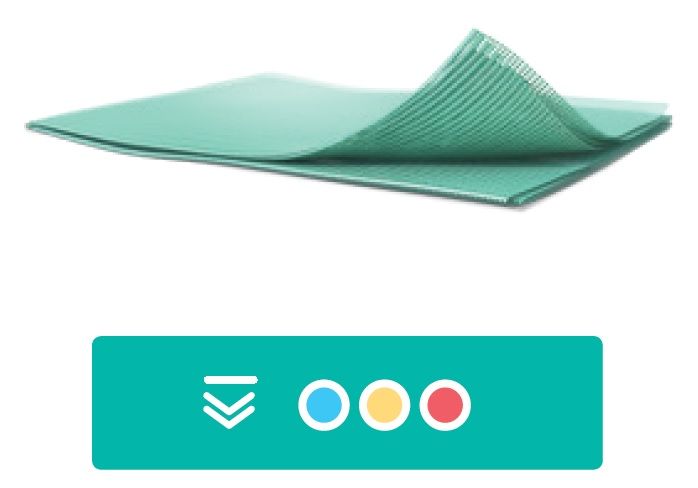
Cutimed Sorbact Contact 7 X 9cm Sterile
Available Options
| Each | Box | Price | Quantity | Description | |
|---|---|---|---|---|
| Each | Ex. GST : $7.85 Inc. GST : $8.64 | |||
| BOX (40 Pcs) | Ex. GST : $314.00 Inc. GST : $345.40 |
Cutimed Sorbact Contact is a DACC-coated, non-absorbent bacteria and fungi binding wound contact layer, based on Sorbact Technology, that allows passage of wound exudate into a secondary dressing. It can also be used in conjunction with NPWT as a liner or wound filler.
Benefits:
- Prevents and treats wound infections: Sorbact Technology dressings reduce bioburden and support effective wound healing, with no known contraindications and low risk of allergies.
- Safe removal of bacteria, fungi and endotoxins: Sorbact Technology dressings irreversibly bind and remove bacteria, without the release of active agents to the wound. Development of bacterial or fungal resistance is not expected.
- Effective against most common resistant pathogens: In vitro tests show that Sorbact Technology dressings are able to inhibit the growth of the Top 5 WHO pathogens.
- Can be cut to suitable size and shape: Easy to cut to any size and custom shape to adapt to your needs, making it suitable for many wound types.
- Suitable for use in conjunction with NPWT: Cutimed Sorbact Pad can be used as a filler or a liner in conjunction with NPWT. It conforms to the wound bed, providing negative pressure distribution without ingrowth of granulation tissue.
Intended Purpose:
- Cutimed Sorbact Contact is intended for use in the management of clean, contaminated, colonised or infected exuding wounds, such as surgical wounds, traumatic wounds, pressure ulcers, diabetic foot ulcers and leg ulcers. It can be used on both superficial and deep wounds. For managing exudate, Cutimed Sorbact Contact should be used together with a secondary dressing appropriate for the exudate level.
- Wear time: Should the clinical condition allow, the dressing can be left in place for up to 7 days.
Instructions for Use:
1. Prepare the wound and surrounding skin according to local clinical practice.
2. Select an appropriate dressing size for the wound. The dressing can be unfolded into suitable size and may overlap the wound margins if needed.
3. Remove the dressing from the peel pouch using an aseptic technique.
4. If the dressing is cut, use an aseptic technique. Do not tear the dressing. Discard any unused dressing.
5. Apply the dressing. Ensure that the dressing comes into direct contact with the complete wound surface to allow
microorganisms to bind to the dressing. In deep wounds, unfold and fluff up one or more dressings and fill the wound. Avoid dense packing. The dressing can also be used as a liner.
6. Apply a secondary dressing appropriate for the exudate level such as a foam dressing, absorbent pad or gelling fiber dressing, and fixate.
7. The dressing change frequency depends on exudate levels and the overall condition of the wound and surrounding skin. Should the clinical condition allow, the dressing can be left in place for up to 7 days.
How to remove:
Should the dressing adhere to the wound, moisten the dressing to assist removal and to avoid disruption of the healing wound.
*This product image is only for reference.
Additional information
| Each | Box | BOX (40 Pcs), Each |
|---|


Reviews
There are no reviews yet.